
What Is Osetra Caviar? Taste, Grades and How to Buy
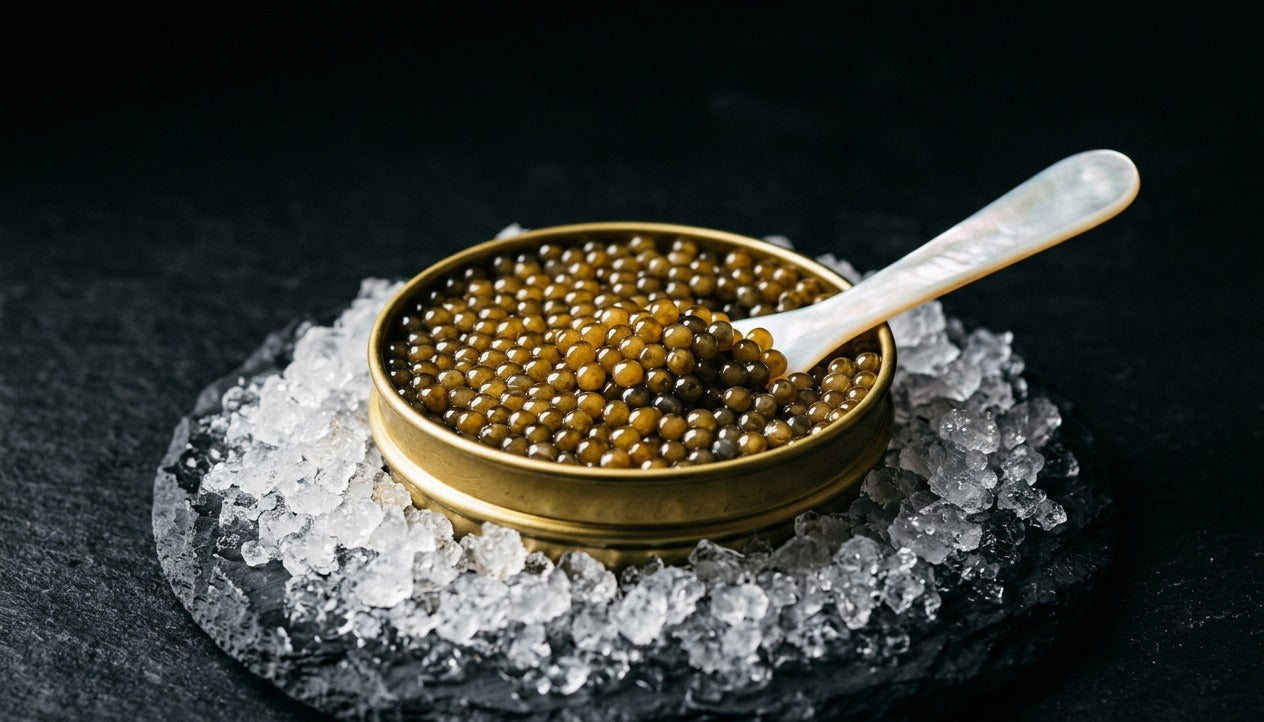
Ask a room of caviar lovers which variety they return to most often, and Osetra comes up again and again. It is not the rarest sturgeon roe or the most expensive, yet it holds a reputation that few other varieties can match. Osetra caviar is the roe of the Russian sturgeon, prized for its nutty, buttery flavor and pearls that range from deep brown to a rare golden amber. It sits at the center of the caviar world, refined enough for a special occasion and approachable enough to become a personal favorite.
This guide explains what makes Osetra different from other sturgeon caviar, how it actually tastes, and what grade names like Imperial and Royal really mean. It also covers how pricing works and how to serve it well once it arrives. By the end, you will know exactly which tin fits your table and your budget.
Where Osetra Comes From
Osetra, also spelled Ossetra or Oscietra, comes primarily from the Russian sturgeon, known scientifically as Acipenser gueldenstaedtii. The species is native to the Caspian Sea, the Black Sea, and the Sea of Azov, where it was harvested for centuries before wild populations declined sharply. The name itself traces back to the Russian word for sturgeon, which tells you how closely this roe is tied to the history of caviar itself.
Today, international trade in wild Caspian sturgeon caviar is tightly restricted under CITES, the treaty that governs trade in endangered species. Nearly all Osetra sold legally comes from aquaculture, with established farms in Italy, Israel, France, Uruguay, China, and the United States. Farming has not diminished the product. It has made quality far more consistent, because farmers control water, feed, and harvest timing in ways that were never possible in the wild.
Patience is part of the story as well. A Russian sturgeon typically needs eight to twelve years before it produces roe worth harvesting, and each fish yields a limited amount. That long timeline is a large part of why Osetra will never be an everyday food, even as farming has made it more accessible than it was a generation ago.
What Does Osetra Caviar Taste Like?
The defining note in Osetra caviar taste is nuttiness. Most tasters describe a flavor that recalls hazelnut or toasted almond, layered over a buttery richness and a clean, gentle brine. Compared with Beluga, which is soft and creamy with very little brine, Osetra has more character and a longer finish. Compared with Sevruga, which is sharper and more intensely marine, it feels rounder and more balanced.
Texture matters as much as flavor. Osetra pearls are medium to large, usually around three millimeters, with a firm skin that gives a satisfying pop before releasing a smooth, almost creamy interior. That pop is a good sign of freshness and careful handling. Pearls that feel mushy or burst too easily often point to roe that has been over-salted, frozen, or stored poorly.
Because Osetra is cured using the malossol method, which means "little salt," the natural flavor of the roe comes through clearly. If you are new to the term, our guide to what malossol caviar means explains why a lighter cure produces a more delicate, more expressive caviar. A well-made Osetra should taste of the sea and of the fish, never simply of salt.
The Range of Colors
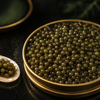
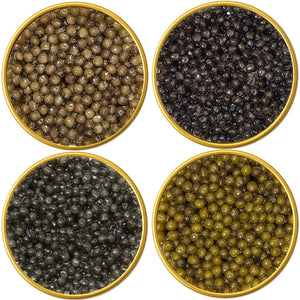
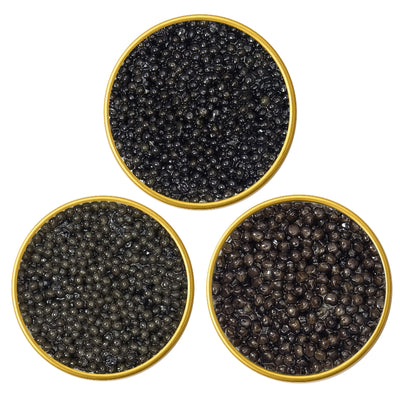
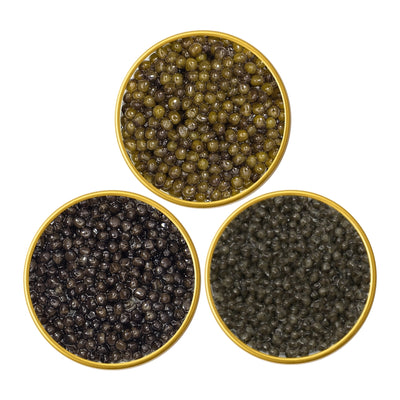
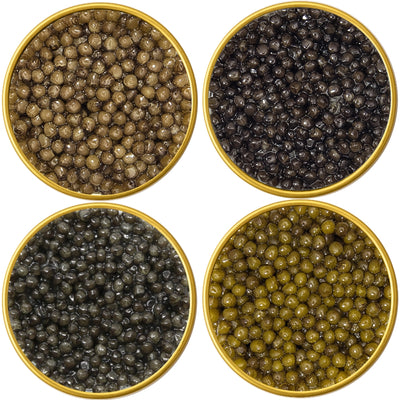
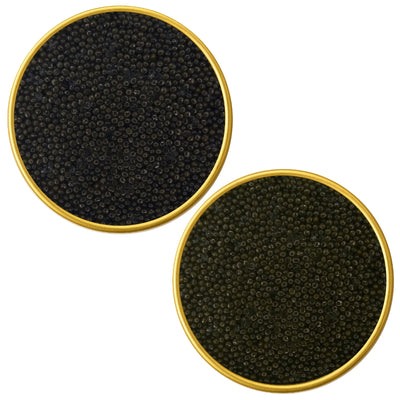
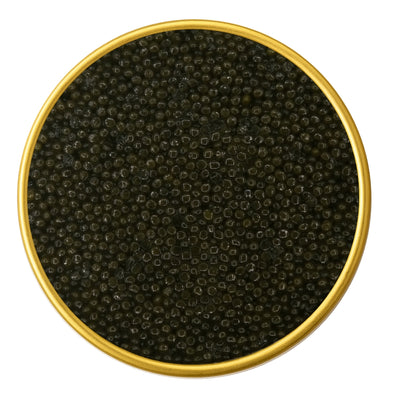
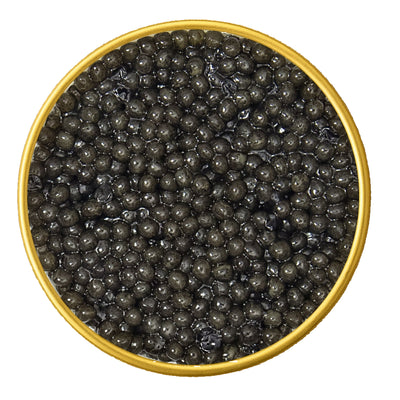
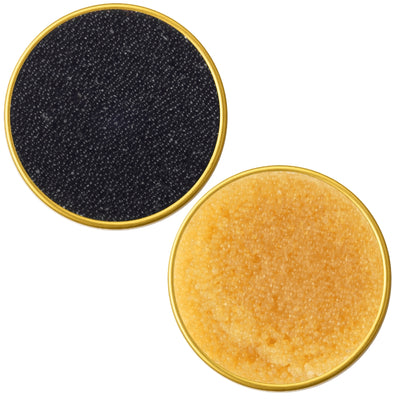
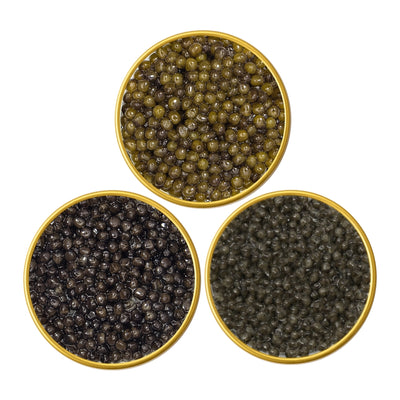
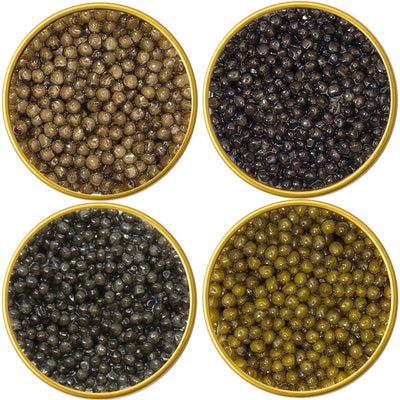
Osetra is one of the most visually varied caviars available. Pearls can be dark brown, olive, gray, bronze, or a pale golden amber, and two tins from the same farm can look quite different from each other. Color alone does not determine flavor, but lighter, golden pearls tend to come from older fish and are produced in much smaller quantities. That rarity is the main reason golden Osetra commands a premium.
How Osetra Is Graded
There is no single international grading standard for caviar, which surprises many first-time buyers. Instead, producers and specialist sellers evaluate each batch on four main qualities: pearl size, color, firmness, and flavor. Larger, firmer, more uniform pearls with a clean taste and lighter color earn the higher grades, while smaller or less uniform roe is sold at lower grades and lower prices.
Names like Imperial, Royal, and Classic are therefore selection labels rather than legal categories. Each seller uses them to describe a tier within its own range, which is why an Imperial tin from one shop is not automatically equal to an Imperial tin from another. The more useful question is what the seller says about the pearls themselves. A clear description of size, color, and flavor tells you far more than a grand-sounding name.

Imperial Osetra
Imperial Osetra caviar represents the top of the selection. At Caviar Malosol, our Imperial Osetra is chosen for large, firm pearls in natural golden to golden-brown tones, with a rich, nutty flavor that finishes on notes of toasted almond. This is the tin to choose when the caviar itself is the centerpiece of the evening and you want the fullest expression of what Osetra can be.
Royal Osetra
Royal Osetra is a hand-selected grade of Russian sturgeon roe, farm-raised in Italy. Its pearls are large, glossy, and uniform, ranging from golden-brown to deep gray, with a bold nutty flavor and a silky, buttery texture. It offers much of the depth of Imperial at a more approachable price, which makes it a natural choice for anniversaries, dinner parties, and anyone ready to step beyond their first tin.
Russian Osetra
Our Russian Osetra is the classic expression of the variety, from the same Acipenser gueldenstaedtii species and farm-raised in Israel. Pearls are large and glossy with natural color variation from golden-brown to gray. The flavor is unmistakably Osetra: nutty, buttery, and lightly briny, with a delicate pop. For many buyers, this is the best balance of authentic character and value.
Siberian Osetra
Siberian Osetra comes from the Siberian sturgeon, Acipenser baerii, a separate species raised on farms in Uruguay. It shares the nutty profile that defines Osetra, which is why it is offered alongside the family, but the flavor is lighter and the pearls are medium-sized in shades of gray, olive, and golden brown. It is an excellent introduction for anyone tasting sturgeon caviar for the first time or serving a larger group.
Osetra Compared With Other Sturgeon Caviar
Understanding where Osetra sits among other varieties makes choosing much easier. Beluga, from the Huso huso sturgeon, has the largest and softest pearls and the mildest, creamiest flavor, along with the highest price. Kaluga, often called the river Beluga, offers a similar buttery richness with large pearls at a lower cost. If you are weighing those two, our comparison of Kaluga vs Beluga caviar covers the differences in detail.
Sevruga sits at the opposite end, with small, dark pearls and an intense, briny flavor that appeals to people who enjoy a stronger taste of the sea. Osetra falls neatly between these extremes. It has more personality than Beluga and more roundness than Sevruga, which is exactly why so many experienced buyers consider it the most rewarding variety to explore. The table below summarizes how the four varieties compare at a glance.
| Variety | Pearl Size | Color | Flavor |
|---|---|---|---|
| Beluga | Very large | Light to dark gray | Mild, creamy, buttery |
| Kaluga | Large | Dark gray to amber | Buttery, smooth, mild brine |
| Osetra | Medium to large | Brown, olive, gray, golden | Nutty, buttery, balanced brine |
| Sevruga | Small | Dark gray to black | Intense, briny, bold |
How Much Does Osetra Cost?
Osetra pricing follows the same logic as grading. Species, pearl size, color, and the age of the fish all affect the final cost, and golden pearls from mature sturgeon sit at the top of the range. Tin size matters too, since larger tins usually carry a lower price per ounce, which is worth keeping in mind if you are serving a group.
The figures below are estimated starting prices for a one-ounce (28g) jar across our Osetra range as of October 2026. Each grade is also available in larger tins, which lower the cost per ounce. Prices can change with harvest and supply, so always check the current listing before you order.
| Osetra Selection | Species | Pearls | Est. Price (1 oz) |
|---|---|---|---|
| Siberian Osetra | Acipenser baerii | Medium, gray to golden brown | $55 |
| Russian Osetra | Acipenser gueldenstaedtii | Large, golden-brown to gray | $70 |
| Royal Osetra | Acipenser gueldenstaedtii | Large, hand-selected, glossy | $85 |
| Imperial Osetra | Osetra sturgeon | Large, firm, golden | $144 |
When a price looks far below this range for anything labeled Osetra, it is worth asking questions. Very cheap tins may contain a different species, older stock, or roe that has been frozen, which damages the texture of the pearls. A reputable seller will always name the species and the country of origin on the listing.
How to Buy Osetra Caviar Online
When you shop for Osetra online, start with the listing itself. Look for the Latin species name, the farm's country of origin, and a clear description of pearl size, color, and flavor. Vague language built around words like "luxury" without any concrete detail is a reason for caution. Specific information shows that the seller knows the product and stands behind it.
Shipping deserves equal attention. Caviar should travel in an insulated box with ice packs on an overnight or expedited service, and it should go straight into the coldest part of your refrigerator when it arrives. Unopened Osetra typically keeps for four to six weeks when held as close to freezing as possible without actually freezing, but once a tin is opened it is best enjoyed within two to three days. Our guide on how to store caviar properly covers every step in more detail.
Finally, match the tin to the occasion. A one-ounce jar suits two people tasting together, while a larger tin is better for a dinner party or a long celebration. If you cannot decide between grades, a sampler set lets you taste several side by side. Our Osetra sampler pairs Imperial, Royal, Russian, and Siberian with crème fraîche, blinis, and a mother-of-pearl spoon, which turns the choice itself into part of the experience.
How to Serve Osetra

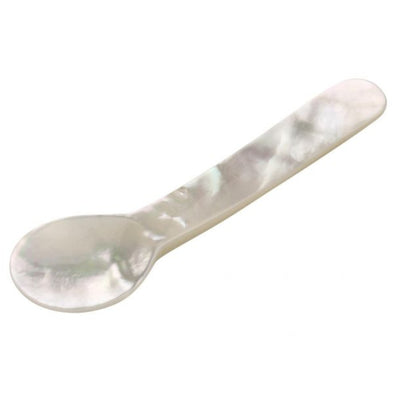
Osetra rewards a simple approach. Remove the tin from the refrigerator about ten minutes before serving so the flavor can open up, then keep it nestled in crushed ice at the table. Serve it with a mother-of-pearl, horn, or glass spoon rather than silver or other reactive metals, which can leave a faint taste on delicate roe. There is a reason this tradition has lasted, and our article on serving caviar with a mother-of-pearl spoon explains it in full.
The best way to appreciate Osetra is on its own first, placed on the back of the hand or eaten straight from the spoon. After that, warm blinis with a small spoonful of crème fraîche, buttered toast points, or a plain boiled potato all support the nutty flavor without hiding it. Avoid strong garnishes like chopped onion or lemon with the higher grades, since they mask the subtle notes you paid for.
For drinks, a dry Champagne or a crisp sparkling wine is the classic choice, because its bubbles and acidity refresh the palate between bites. Ice-cold vodka is the traditional Russian pairing and works especially well with the bolder flavor of Russian Osetra. A dry white wine such as Chablis is another quiet, elegant option.
Choosing Your First Tin of Osetra
Osetra has earned its place as the variety many caviar lovers come back to, because it delivers depth, variety, and balance in every tin. Its nutty flavor, firm pop, and range of colors make each grade a slightly different experience. Once you understand that grade names describe pearl quality rather than a universal standard, choosing becomes a matter of taste and occasion rather than guesswork.
If you are new to the variety, Siberian or Russian Osetra offers an authentic introduction at a gentle price. If you are celebrating, Royal or Imperial shows how golden and refined Osetra can become. You can explore every option in our full Osetra collection and find the tin that suits your table.