White Sturgeon Caviar Buying Guide: What to Know Before You Order
Most people shop for caviar the way they’d shop for wine by color: pick the species, pick the price, done. White sturgeon caviar gets chosen this way constantly, usually because it’s positioned as the accessible option next to Beluga or Osetra. Species is a reasonable starting point, but it tells you far less than buyers assume. Two jars of the same white sturgeon caviar can differ significantly depending on how the roe was cured, how it was shipped, and how fresh it actually is when it reaches your door. This guide walks through what to actually check, not just what to pick.
What “White Sturgeon Caviar” Actually Means
White sturgeon caviar comes from Acipenser transmontanus, the Pacific white sturgeon, native to rivers along North America’s Pacific Coast, including the Snake, Sacramento, Columbia, and Willamette. Nearly all of it sold today is farm-raised in controlled aquaculture facilities rather than harvested from wild stock, which is worth knowing before you buy, since it directly shapes what you’re paying for.

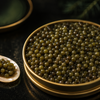
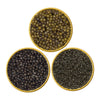
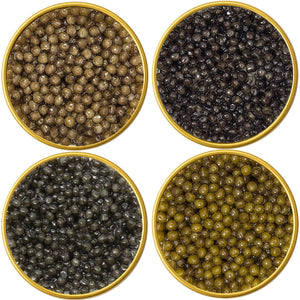
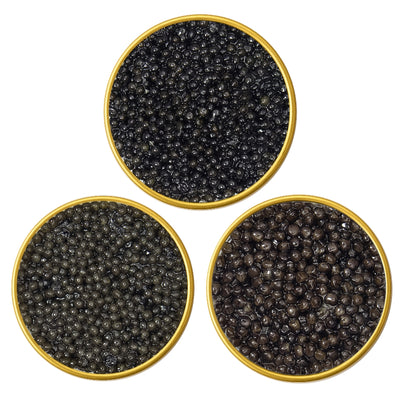
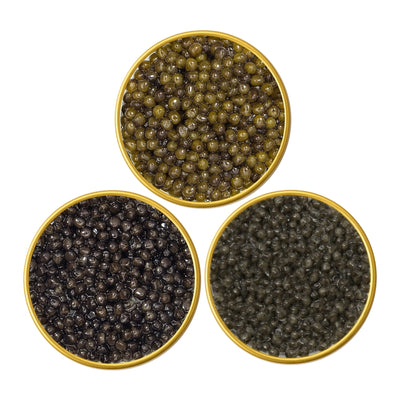
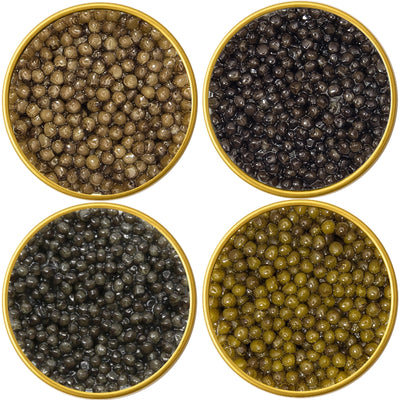
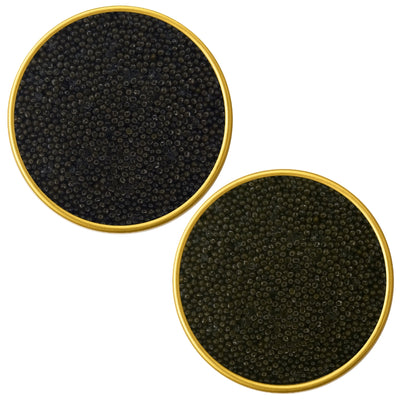
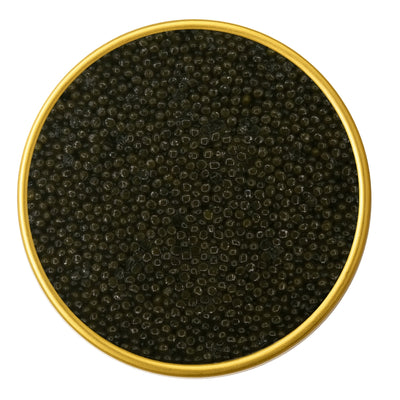
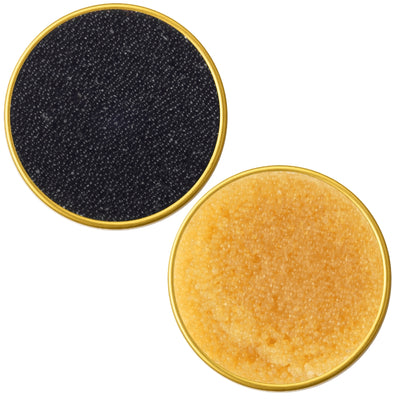
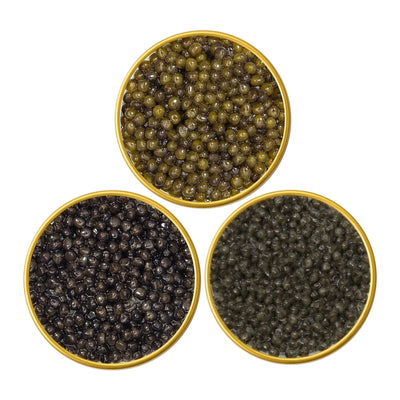
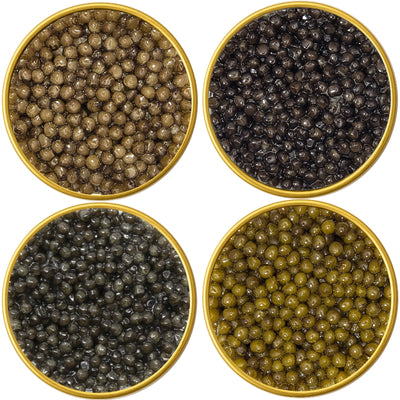
Farm-raising removes a lot of the variability that comes with wild-caught roe. Female sturgeon need close to a decade of careful feeding before they mature enough to produce eggs, and once harvested, that roe is cured using the Malossol method, a light-salt process that preserves the roe’s natural flavor rather than masking it. The result is a caviar with medium to large pearls in a color range from light grey to deep black, a smooth and mild flavor, and a clean finish. None of that is visible on the label, but it explains why quality within the species can still vary from one seller to the next.
Farm-raised is also, in this case, the more sustainable option, not a lesser one. Decades of overfishing pushed several wild sturgeon populations toward collapse, which is why most caviar sold today, white sturgeon included, comes from closely managed farms rather than open water. That shift gives farms far more control over water temperature, feed, and the exact timing of harvest, all of which show up later as consistency in the jar rather than the natural variation you’d get from wild-caught roe.
How It Compares to Other Caviar You’ll See Listed
Species names get used as a stand-in for a flavor description, which is useful shorthand as long as you know what each one actually means. The table below reflects how Caviar Malosol’s own varieties compare, using starting prices for the smallest available size of each.
| Variety | Pearl Size | Flavor Profile | Starting Price |
|---|---|---|---|
| White Sturgeon | Medium to large | Smooth, mild, buttery, clean finish | $52 (1oz jar) |
| Siberian Osetra | Medium | Nutty, complex, faint mineral note | $55 (1oz) |
| Royal Osetra | Medium to large | Richer, more pronounced nuttiness | $85 (1oz) |
| Beluga | Large | Subtle, almost creamy, very smooth | $103.20 (starting) |
| Imperial Osetra | Large, golden | Rare, deep, complex | $144 (starting) |
A lower starting price does not mean a lesser product here. It largely reflects how widely available the species is and how long it takes to farm, not a quality tier. White sturgeon sits at the milder, more approachable end of the flavor spectrum, which makes it a genuinely different choice from Osetra or Beluga rather than a discount version of either. If you want to see the full range side by side, our sturgeon caviar collection lists every variety with the same detail.
What to Check Before You Order
Once you’ve settled on a variety, the details that actually determine whether you’ll be happy with the order have little to do with the species name. A handful of checks separate a well-handled jar from a disappointing one, and most of them take less than a minute to confirm before you buy.

Look for a harvest or packed date rather than a vague best-by window. That date tells you how fresh the jar actually is, not simply how long a retailer is allowed to keep it on a shelf, and a seller who lists it clearly is usually one who takes the rest of the process just as seriously. Ask how the caviar ships, too. Caviar needs to stay near freezing from the moment it’s packed until you open it, so insulated packaging and ice packs aren’t an upsell, they’re the baseline. A seller who treats cold shipping as optional is asking you to trust that nothing went wrong in transit, and with a product this sensitive, that’s not a small thing to take on faith.
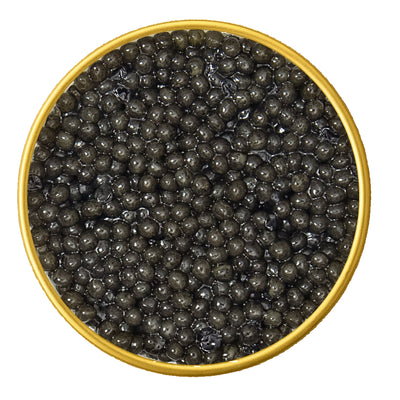
Once the jar is in hand, the pearls themselves should look distinct and glossy rather than clumped together or dull, and the color, while naturally variable from light grey to black, should be even throughout rather than patchy. A clean, faintly oceanic smell is normal. Anything sharp, sour, or ammonia-like is a sign the roe has started to break down and should be returned rather than served.
It is also worth asking a seller directly what species you are actually buying, since caviar labeling has a documented history of inaccuracy. Independent testing of retail caviar has repeatedly found jars labeled as one species that turned out, on genetic analysis, to be another, usually a cheaper one sold under a more desirable name. A retailer that can tell you exactly which sturgeon your caviar came from, and where it was farmed, is giving you a straightforward answer to a question the industry doesn’t always answer well.
Choosing the Right Size for What You’re Actually Doing
White sturgeon caviar comes in a wide range of container sizes, and matching the size to the occasion matters more than people expect. A one-ounce jar is built for a first taste or a quiet night for two, while a two-ounce jar covers a small dinner where caviar plays a supporting role rather than the main event. The 4.5-ounce jar or gold tin is a reasonable middle ground for a proper tasting or a gathering of four to six people who want a real serving each.
Beyond that, the larger gold and blue tins, from nine ounces up to a full kilo, are built for entertaining rather than personal use, and buying at that scale only makes sense if you have a firm guest count and a clear plan for serving it the same day. Caviar doesn’t keep especially well once opened, so oversizing an order for a small gathering usually means wasting a meaningful amount of an expensive product rather than getting better value from it.
How to Serve It Once It Arrives

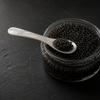
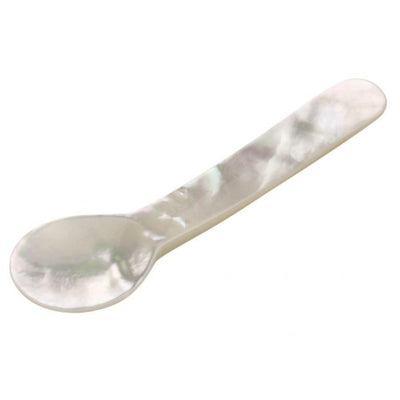
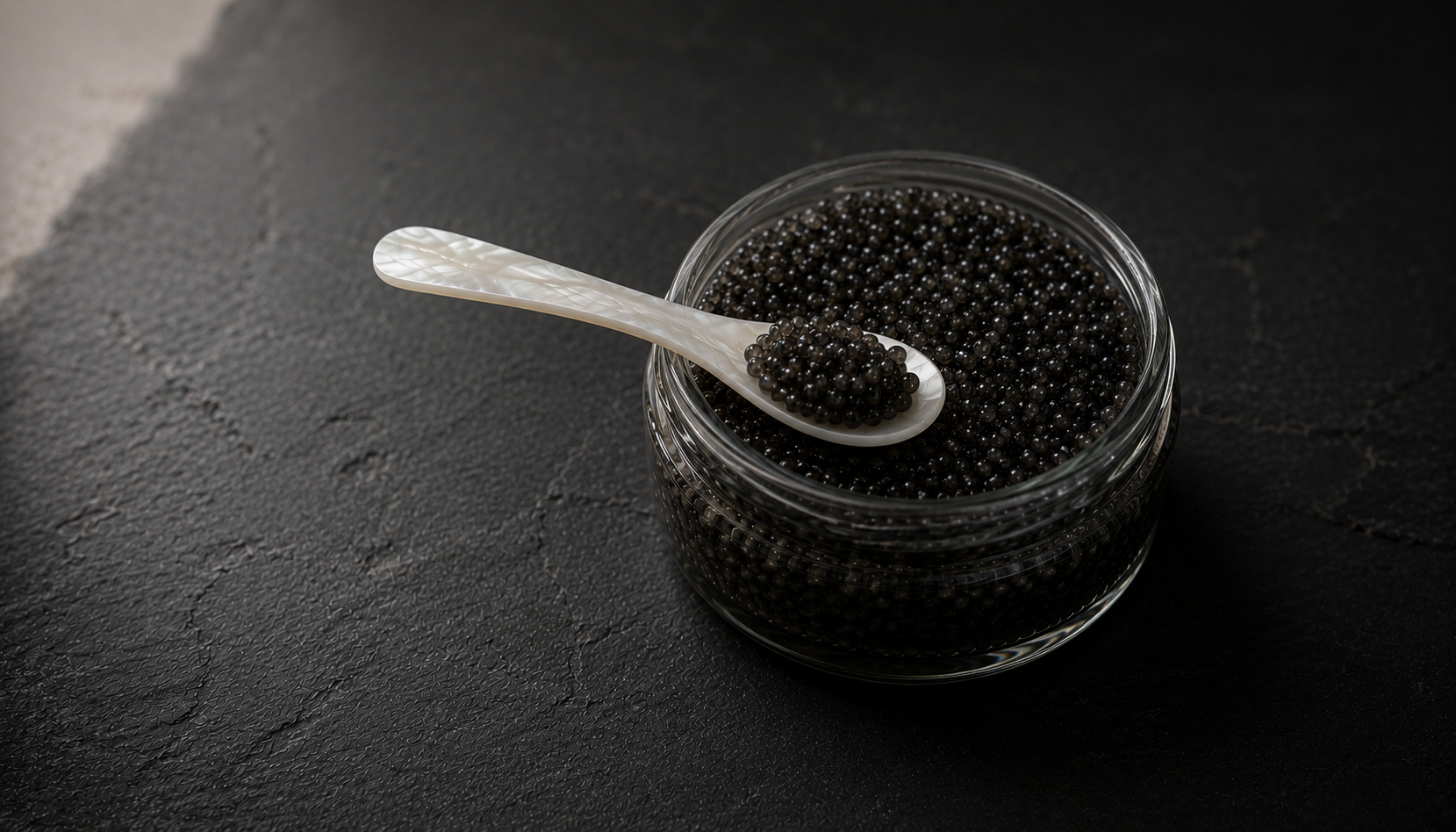
Serve caviar just above freezing, ideally straight from a chilled dish nested in ice, since warmth breaks down the pearl’s texture within minutes. Use a spoon made from mother-of-pearl, bone, or resin rather than metal, which reacts with the roe and introduces a faint metallic taste that has nothing to do with the caviar itself. A mother-of-pearl spoon is a small purchase that protects a much larger one, and a fresh spoon for each serving keeps bacteria from a used utensil from spoiling the rest of the jar faster than it should.
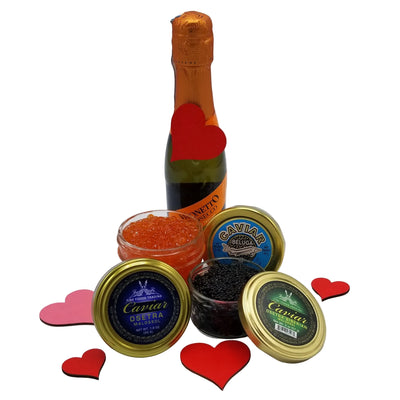
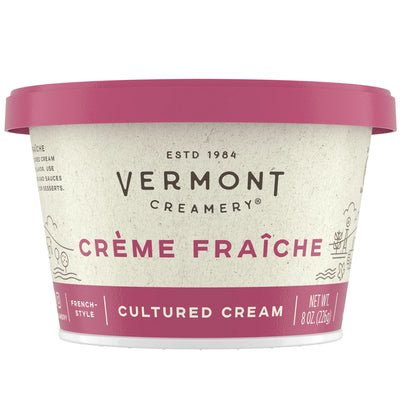
From there, the classic pairings hold up for good reason: unsalted blinis, thin toast points, a small dollop of crème fraîche if you want it, and something cold and dry to drink, whether that’s champagne or chilled vodka. Plan for roughly an ounce per person if caviar is the centerpiece of the table, and closer to half that if it’s one part of a larger spread.
Who Should Buy White Sturgeon Specifically
White sturgeon caviar is the right choice for someone who wants a genuine, well-made caviar without a strong briny or mineral edge, whether that’s a first-time buyer or someone who has simply decided they prefer a milder profile. It also makes sense for smaller, more frequent occasions, since the lower starting price makes it easier to justify buying more often rather than saving caviar for a single yearly event.

If you know you prefer a bolder, more complex flavor, Osetra or Beluga will likely suit you better, and that’s a matter of preference rather than either being the more advanced choice. Our American white sturgeon caviar is available across the full range of sizes described above, so the harder decision is really about occasion and portion, not whether the species itself is good enough.
It also holds up well as a caviar to keep on hand rather than reserve for a single occasion a year. Its price point and mild profile make it easier to justify opening a jar for an ordinary Tuesday dinner, which is a different kind of value than simply being the cheapest option on the page. That’s arguably the more useful way to think about where it fits in a buying decision.
Buying caviar well comes down to the same handful of checks regardless of which variety ends up in your cart: a clear harvest date, a cold chain that was actually maintained, pearls that look and smell the way they should, and a size that matches what you’re actually planning to do with it. Get those right, and the species name becomes a flavor preference rather than a decision you have to get perfect.