
Caviar Delivered To Your Doorstep: The Complete Buying Guide
- Updated
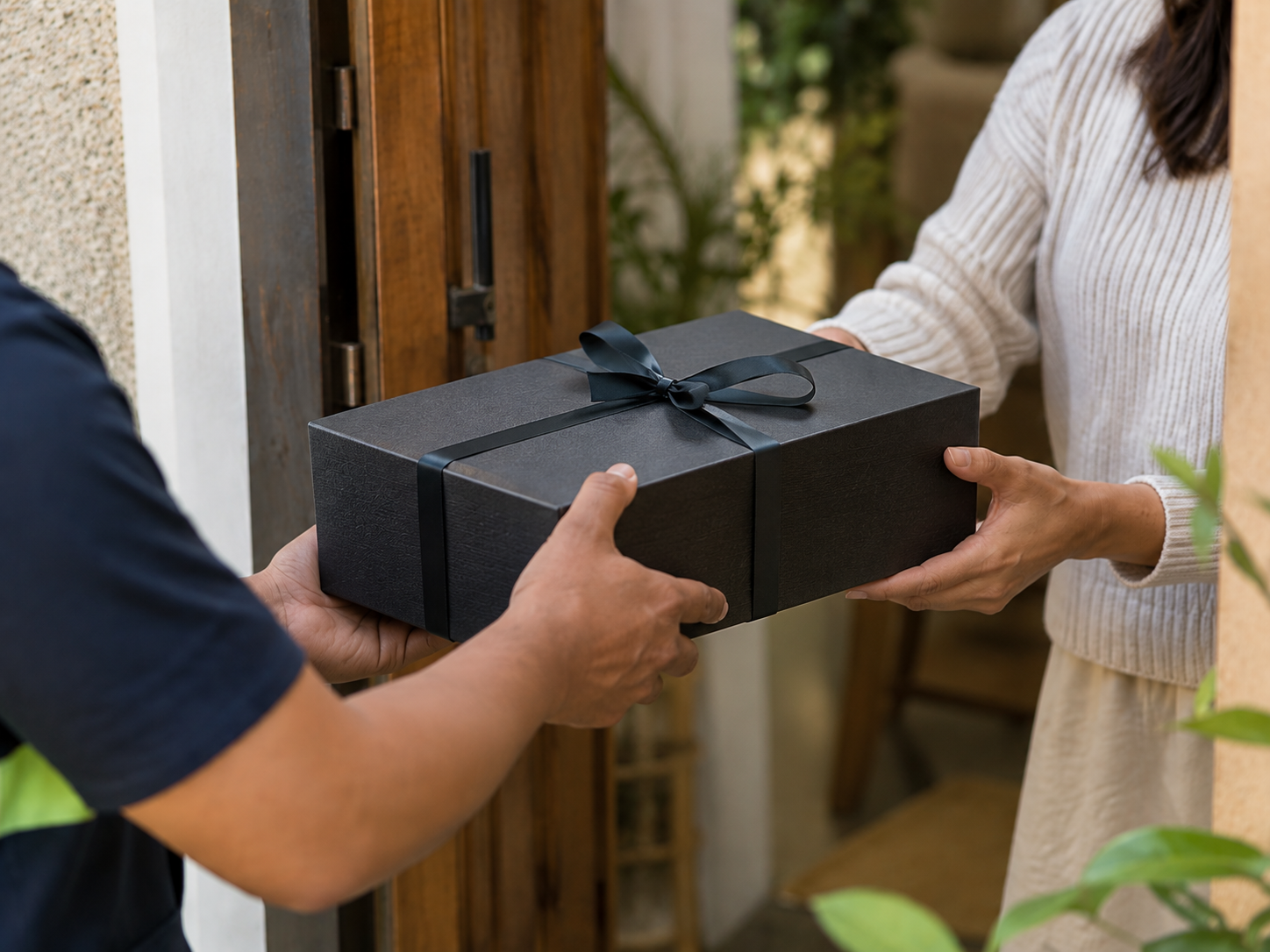
Most people assume the hardest part of getting caviar delivered is finding the right price. It isn't. Price is easy to compare with a few browser tabs open. What actually determines whether a caviar delivery turns out well is something most first-time buyers never think to check: how the caviar is handled between the moment it leaves the seller and the moment it reaches your table. A tin of excellent caviar delivered carelessly will arrive worse than a modest tin shipped with care.
This guide walks through what actually matters when you get caviar delivered, from evaluating a seller before you order to what to do in the minutes after your delivery arrives. The goal is a decision you can make with confidence, not guesswork.
What Changes When Caviar Is Delivered Instead of Bought In Person
In a specialty shop, someone who knows caviar can open a tin, describe the grain size and flavor, and hand it to you cold minutes before you leave. Online, none of that happens in front of you. The caviar spends hours, sometimes closer to a full day, inside a shipping box before you ever see it. That shifts the responsibility for quality away from a person you can ask questions to a system of packaging, timing, and temperature control that has to work correctly without anyone watching it happen.
This is not a reason to avoid ordering caviar online. It is a reason to be selective about where you buy it. A seller who understands how sensitive caviar is builds their entire process around protecting it, down to the box they use and the day of the week they choose to ship. A seller who treats caviar like any other packaged food usually does not, and it shows in how the order arrives.
What to Look for Before You Buy Caviar Online
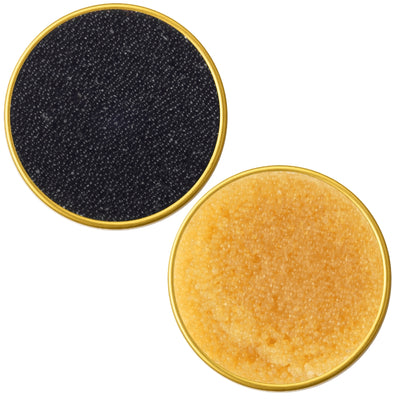
Knowing where to buy caviar is not just a matter of finding a website that sells it. Plenty of sites do. The question worth asking is which of them will still be reliable on the specific day your order ships, since that is the day that actually determines how your caviar arrives. Start with how the product itself is described. A seller who lists the species, the grade, and the flavor profile clearly is telling you they understand what they sell. Vague listings that lean entirely on words like "luxury" or "exquisite" without any real detail are worth a second look, since they often signal a reseller rather than a specialist. The same goes for pricing. Caviar prices vary by species and grade for real reasons, and a seller who explains that variation is easier to trust than one who lists a single flat number for every tin on the site.
Customer feedback matters more here than it does for most products, simply because you cannot inspect the item yourself before it ships. Look for reviews that mention how the order arrived, not just how the caviar tasted. Buyers who consistently describe fast shipping and careful packaging are describing a seller who has solved the hard part of selling a perishable food online. That pattern is a better signal than star ratings alone.
Sourcing is worth a look too, even if it feels like a secondary concern next to flavor. Sturgeon populations are still recovering in parts of the world, and a seller who can speak plainly about where their caviar comes from and how it is farmed is usually one who takes the rest of the process just as seriously. This does not mean every purchase requires a research project. It means a seller's willingness to answer the question at all tells you something about how carefully they run the rest of their business.
Understanding Caviar Delivery: Packaging, Timing, and Cost

Once you order caviar online, most of what happens next is out of your hands, which is exactly why it is worth understanding before you check out rather than after. Caviar delivery is really a cold chain problem wearing a gift box. The caviar needs to stay close to freezing from the moment it leaves refrigeration until it reaches yours, which is why a properly run caviar delivery service ships in an insulated container with ice packs rather than a standard padded envelope. If a seller does not mention insulated packaging anywhere on their site, assume they are not using it.
Caviar delivery cost is usually tied to two things: how far the package has to travel and how large the order is. Sellers who ship nationally often split the country into zones, with orders to nearby states costing less to ship than orders to more distant ones, and most offer a free shipping threshold once an order reaches a certain size, commonly somewhere around $500. Below that threshold, expect a flat delivery fee in the neighborhood of $40 to $50 for smaller orders, which covers the insulated box, ice packs, and expedited shipping needed to get caviar shipped to your door quickly. A seller who cannot tell you clearly what shipping will cost before checkout is one to be cautious of.
Timing matters as much as packaging, and it is easy to overlook. A box that ships on a Thursday can end up sitting in a regional carrier facility over the weekend, which defeats the purpose of paying for expedited shipping in the first place. A caviar delivery service that pays attention to this will hold or adjust orders placed later in the week rather than let them sit in transit, even if that means a slightly longer wait before the package leaves the warehouse. That kind of judgment call, more than anything printed on the site itself, is what separates the best caviar delivery services from the rest.
Caviar for Sushi vs. Buying Caviar Itself
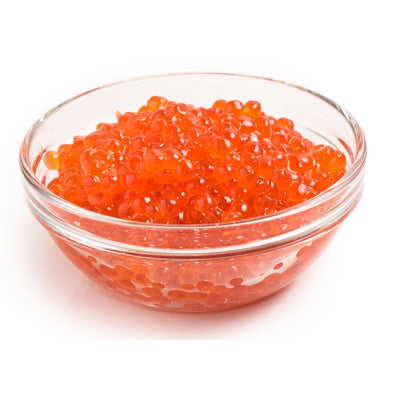
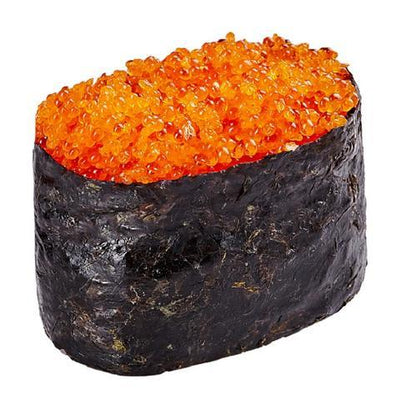
A large share of people searching for where to buy sushi caviar are not actually looking for sturgeon roe. Much of what appears bright orange or red on sushi rolls is masago or tobiko, both flying fish or capelin roe rather than true caviar, and both considerably less expensive. There is nothing wrong with either one. They serve a different purpose, adding crunch and color rather than the buttery, mineral depth of sturgeon caviar or the briny pop of true salmon roe.
If you are ordering for a sushi night at home, either category can work depending on what you are after. If you want the deeper, more complex flavor associated with real caviar, look specifically for sturgeon varieties like osetra or beluga, or a genuine salmon roe, rather than assuming anything labeled "caviar" on a sushi menu is the same product. Knowing the difference before you order saves you from paying sturgeon prices for capelin roe, or the reverse.
Buying Caviar as a Gift

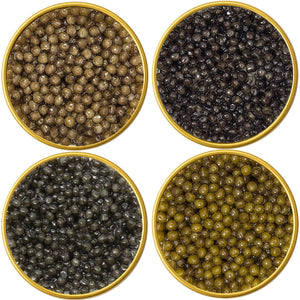
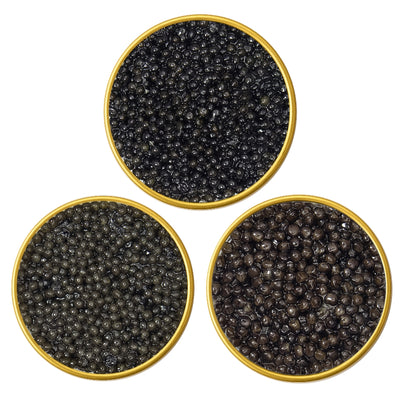
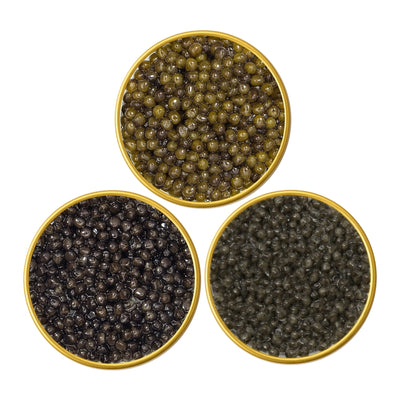
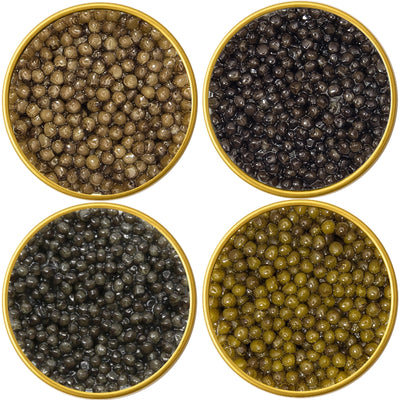
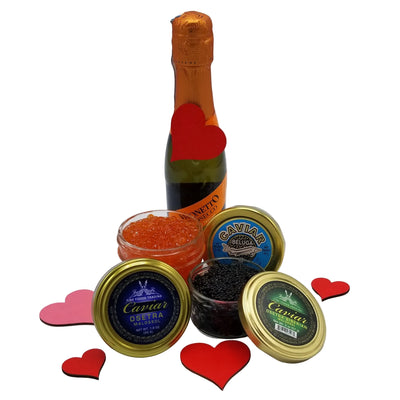
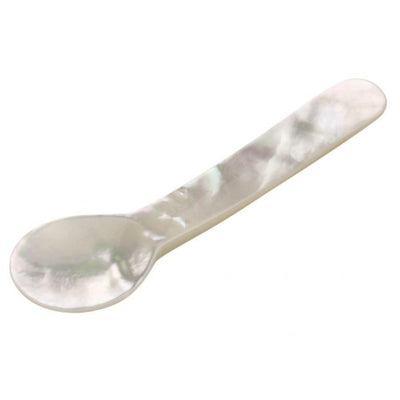
A caviar gift set solves a specific problem: it lets someone try several varieties without committing to a full tin of any single one, which makes it a natural choice for a birthday, an anniversary, or any occasion where you want to give something the recipient would not necessarily buy for themselves. A well-built set does more than bundle a few small jars together. It typically includes the serving essentials, a mother of pearl spoon, crème fraîche, and blinis, so the recipient can serve it properly without having to source anything else first.
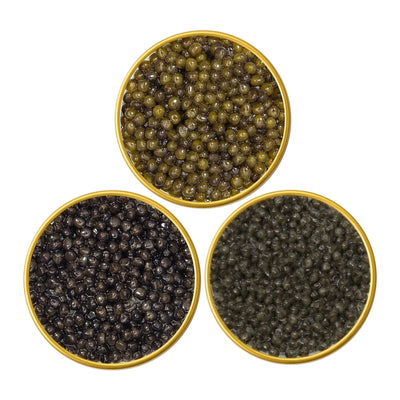
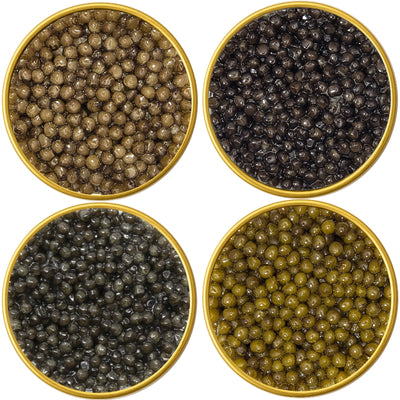
Sampler sets built around a single sturgeon species, an osetra sampler with several osetra grades, for instance, are a good option for someone who already knows they like caviar and wants to compare within a family of flavors. A mixed set spanning different species is usually the better choice for someone newer to caviar, since it gives them a real basis for comparison on their first try rather than a single data point.
What to Do the Moment Your Caviar Arrives
Open the box as soon as it arrives, even if you do not plan to serve the caviar right away. Check that the ice packs still have some cold left in them and move the tin straight into the refrigerator, ideally toward the back of a lower shelf where the temperature stays most consistent. Caviar should sit between 33 and 36 degrees Fahrenheit, and it should stay sealed until you are ready to serve it.
When you do serve it, use a clean spoon every time, and avoid anything metal beyond stainless steel, since other metals can react with the roe and dull its flavor. Serve it just above freezing rather than fully chilled refrigerator temperature, since caviar served too cold loses some of its aroma. Small details like these affect the experience more than price does. Two people can buy the same tin and have a completely different experience with it, depending on how it was handled after it arrived.

Plans change, and it is common to order caviar for an occasion that ends up shifting by a few days. If that happens, leave the tin sealed and refrigerated rather than opening it early out of curiosity. Unopened, properly refrigerated caviar holds its quality for longer than most people expect, but that window shortens fast once the seal is broken. For a full breakdown of storage timelines and what to do if you are not serving everything at once, the guide to properly storing caviar covers it in more depth.
Getting caviar delivered well rewards a little attention paid to the process itself, not just the product on the page. A seller who is transparent about sourcing, clear about delivery, and careful with packaging is doing the hard part of the work before the box ever reaches your door. The rest, from choosing a grade to setting the table, is the part you get to enjoy.