Caviar Myths Beginners Always Believe: And the Truth Behind Them
- Updated

Caviar myths beginners carry into their first experience can ruin it before it even starts. The intimidation is real: the price tags, the etiquette, the unfamiliar flavors. Most people arrive with a set of assumptions that were never really true to begin with, picked up from films, dinner party conversations, or a passing article online.
The result is that a lot of people either avoid caviar entirely or approach it so cautiously that they never actually enjoy it. That is a problem worth fixing. Once you strip away the misconceptions, caviar becomes something approachable, nuanced, and genuinely worth exploring regardless of your background or budget.
Here are the six caviar misconceptions that beginners almost always carry in, and the honest truth behind each one.
Myth 1: Caviar Is Only for the Wealthy
This is the most persistent caviar misconception, and it is understandable where it comes from. Beluga caviar, the rarest and most regulated variety in the world, can fetch thousands of dollars per tin. That price point tends to define the entire category in the public imagination, but Beluga is the exception and not the rule.
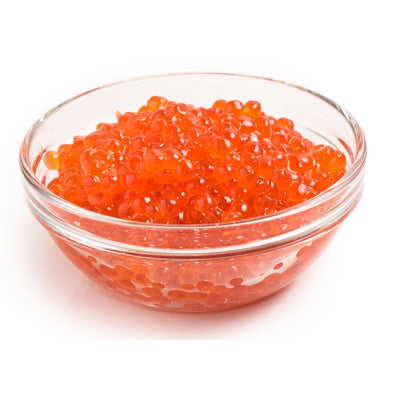
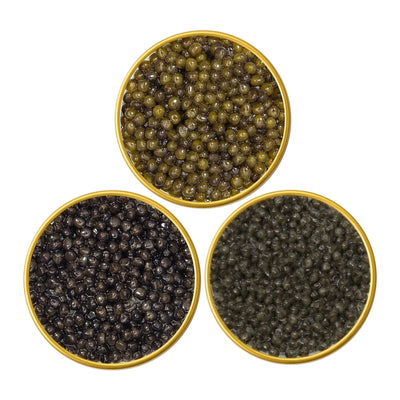
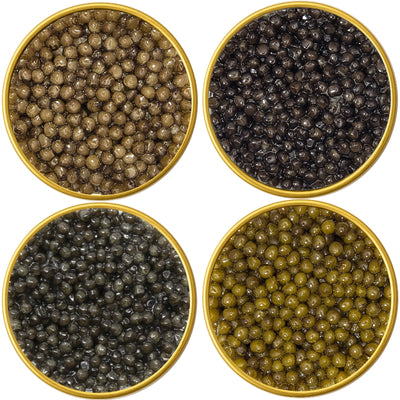
Farmed sturgeon varieties like Siberian and Baerii caviar have brought the market into a much more accessible range. A quality 30g tin from a reputable producer can cost less than a decent bottle of wine. Trout roe and salmon roe offer even more entry-level options that share many of the same characteristics: clean brine, delicate texture, and genuine complexity.
The shift toward sustainable aquaculture over the past few decades has fundamentally changed the caviar market. You no longer need to be dining in a Michelin-star restaurant to enjoy the real thing. What you do need is a reliable source and a willingness to start without preconceptions.
Myth 2: All Caviar Tastes Fishy
Ask someone who has never tried caviar what they expect it to taste like, and "very fishy" is almost always the answer. It makes intuitive sense given fish eggs, ocean origin, and a briny reputation. But this caviar fact surprises most beginners: high-quality caviar should not taste aggressively fishy at all.
What you actually taste in good caviar is a layered combination of clean ocean salinity, a subtle nuttiness, and a creamy, almost buttery finish. The texture is part of the experience too. The way the eggs gently pop and release their flavor is something that cannot be replicated by any other ingredient. That progression from the initial brine to the lingering finish is what makes it distinctive.
Strong or off-putting fishiness in caviar is typically a sign of poor quality, improper storage, or a tin that has been open too long. When caviar is fresh, properly handled, and served cold, the flavor is clean and elegant, nothing like the stereotype suggests. If your only reference point is an unpleasant experience with low-grade roe, it is worth giving it another try with a better source.
Myth 3: You Need to Be an Expert to Appreciate It
There is a version of caviar culture that is deliberately exclusionary, built around sommelier-level vocabulary, strict protocol around service temperature, and unspoken rules about which spoon is acceptable. None of that is actually required to enjoy caviar. It has been built up over time as a cultural layer around the product, not as a genuine barrier to entry.
Appreciating caviar is no different from appreciating good cheese or well-made coffee. You bring your attention, you taste slowly, and you let the flavors develop. No certification required. The more you try, the more nuance you begin to notice: the difference between varieties, between producers, between seasons. That knowledge builds naturally through experience, not study.
The one practical tip worth knowing as a beginner is to start with a small amount on its own, without accompaniments, so you can actually taste what the caviar is doing. Blini, crème fraîche, and the classic caviar pairings all have their place, but they work best once you know what you are pairing with. Keep the first taste simple and unhurried.

Myth 4: Caviar Must Be Eaten Plain
The opposite misconception also exists. Some beginners, having read about traditional service, assume caviar must always be eaten on its own with nothing else involved. The reality is that caviar has a long and well-established history of pairing, and those combinations exist because they genuinely work.
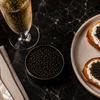
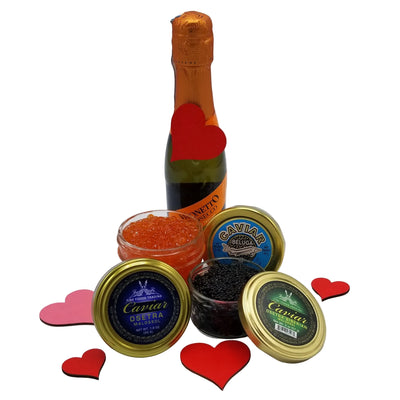
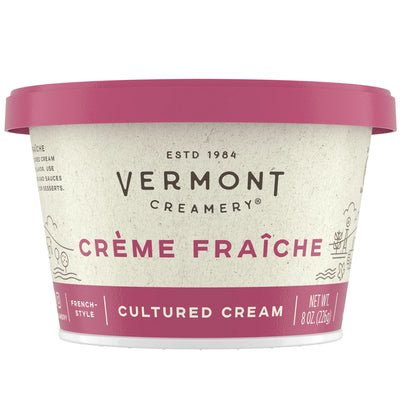
Blini with a small amount of crème fraîche is the most classic base, softening the brine and adding a dairy richness that balances the eggs beautifully. Lightly toasted brioche achieves something similar with a slightly sweeter, more buttery contrast. Champagne, particularly blanc de blancs, cuts through the fat and salinity and refreshes the palate between bites. These are not arbitrary traditions; they have survived because they are genuinely good.
The key principle when pairing caviar is restraint. Whatever you serve alongside it should support the caviar's flavor without competing with it. Strong flavors like onion, citrus, and heavy spice tend to overwhelm it, while neutral, slightly rich accompaniments tend to enhance it. Once you understand that logic, the pairing possibilities open up considerably beyond the traditional options. For inspiration, our caviar appetizer recipes are a good place to start.
Myth 5: More Expensive Always Means Better
Price and quality do correlate in the caviar world, but not in a straight line and not at every step. Beluga commands its price due to rarity and regulation, not necessarily because it will deliver a better first experience than a well-produced Osetra at a fraction of the cost. For a beginner, the most expensive option is rarely the most appropriate starting point.
What actually determines quality in caviar is the freshness of the product, the conditions under which the sturgeon was raised, and the care taken during processing and storage. Responsibly farmed Siberian caviar from a trusted producer will consistently outperform a poorly handled, overpriced alternative. Learning to read producer reputation and freshness indicators is more useful than following price alone.
Start somewhere in the mid-range: enough quality to get an honest sense of what good caviar tastes like, without the pressure of an extraordinary price tag on your first try. If you are unsure where to begin, our caviar price guide breaks down what to expect at each tier and which varieties offer the best value for new buyers.

Myth 6: Caviar Is Difficult to Store
Storage anxiety is one of the quieter myths that stops people from buying caviar for home use. The assumption is that it requires special equipment or conditions impossible to replicate outside a restaurant setting. In practice, storing caviar correctly is straightforward, even though the rules are specific.
Here is what you actually need to know:
- Store unopened tins in the coldest part of your freezer, ideally between 28°F and 32°F (-2°C to 0°C)
- An unopened tin keeps well for two to four weeks when stored correctly
- Once opened, consume within two to three days and keep it covered between servings
- Avoid moving the tin in and out of the fridge repeatedly, as temperature inconsistency is the fastest way to deteriorate quality
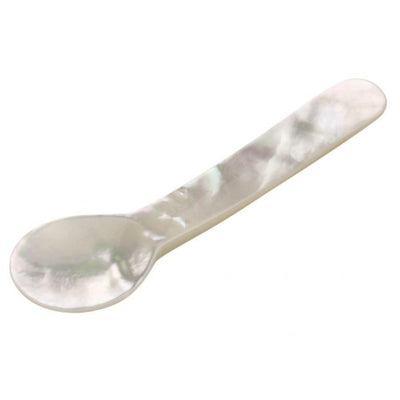
- Always use a clean, non-contaminated spoon when serving caviar. Never reuse a spoon that has been in your mouth, as introducing bacteria will quickly spoil the caviar, often within a day.
The practical takeaway is simple: buy caviar closer to when you plan to serve it, keep it sealed and cold, and finish the tin within a short window after opening. None of that requires special equipment. For a full breakdown of how to handle it at home, our guide on how to store caviar covers everything you need.

The Real Barrier Was Never the Caviar
What stops most beginners is not the product itself. It is the mythology surrounding it. The assumption that caviar requires wealth, expertise, or a particular kind of palate has kept it at arm's length for people who would genuinely enjoy it and whose health would benefit. Strip those assumptions away and what remains is an ingredient with real depth, a fascinating range of varieties, and a learning curve that is actually enjoyable to climb.
The best starting point is always the simplest one. Find a reputable producer, order a modest tin in the mid-range, keep it cold, and serve it on its own for the first taste. Pay attention to what you are tasting: the brine, the texture, the finish. Everything else follows naturally from there. For a practical walkthrough of your first experience, our guide on how to eat caviar for the first time covers everything from opening the tin to the first bite.
Caviar does not require a special occasion or a particular identity. It requires curiosity, a cold tin, and enough time to actually taste what is in front of you. Most people who try it on those terms find it far more approachable and far more interesting than they ever expected.