Masago vs Tobiko: A Complete Breakdown of Two Iconic Sushi Roes
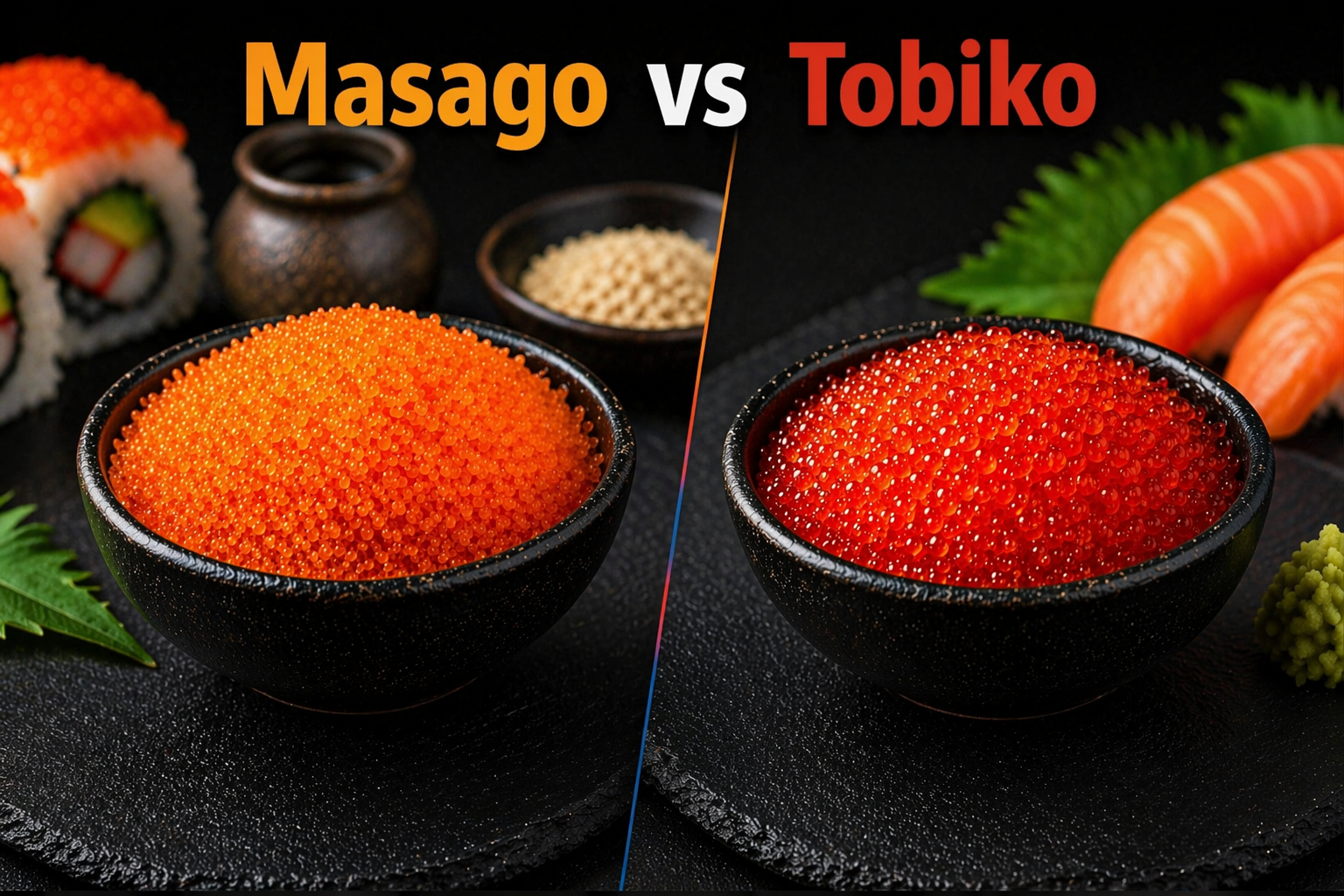
If you have ever ordered sushi and noticed tiny, colorful eggs sitting on top of a roll, there is a good chance you were looking at either masago or tobiko. Most people use the two terms interchangeably, but they are not the same thing. This complete breakdown of masago vs tobiko covers everything that sets them apart, from taste and texture to origin, nutrition, and price.
Both masago and tobiko are types of fish roe that have earned a permanent place in Japanese cuisine and sushi culture worldwide. They look similar at a glance, but once you know what to look for, the distinctions become clear. If you are new to fish roe in general, our caviar basics and education guide is a great place to start.
What Is Masago?
Masago is the roe of the capelin fish, a small smelt-like species found in cold waters across the North Atlantic and Arctic. The name masago comes from Japanese and roughly translates to "sand," which is fitting given how small and uniform the eggs are. Each individual egg is tiny, smaller than a sesame seed, and they tend to cluster together in a dense, compact mass.
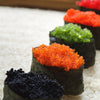
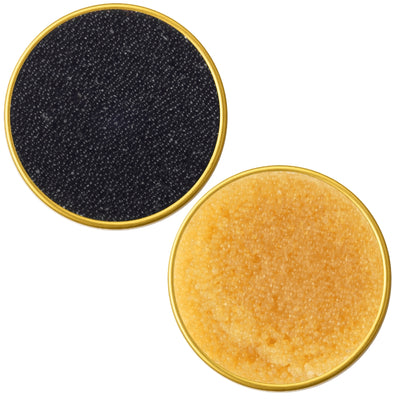
In its natural state, masago has a pale yellow or orange color. Most commercially available masago is dyed to achieve a more vibrant orange, red, or black appearance, which makes it visually appealing on sushi rolls. The flavor is mild and slightly briny with a subtle oceanic taste that does not overpower whatever it is paired with. Because of its mild flavor and low cost, masago is one of the most widely used types of fish roe in mainstream sushi restaurants.
Capelin is an abundant fish and relatively easy to harvest at scale, which is why masago is consistently affordable. It is a practical choice for restaurants that need to use fish roe in large quantities without significantly increasing food costs. You can read a full breakdown of its culinary role in our guide on masago in sushi.

What Is Tobiko?
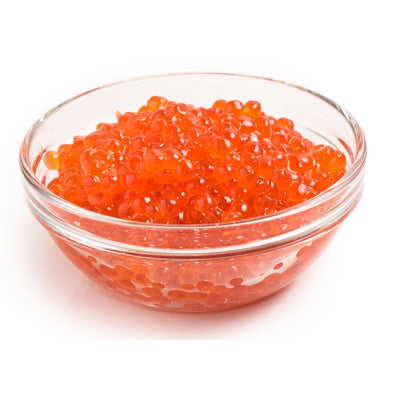
Tobiko is the roe of the flying fish, a species native to warm tropical and subtropical ocean waters. The name tobiko translates to "flying fish roe" in Japanese, and it has been a staple of Japanese cuisine for generations. Compared to masago, tobiko eggs are noticeably larger, more distinct, and more varied in their natural coloring.
Natural tobiko ranges from a deep reddish-orange to amber, and it has a characteristic crunch that sets it apart from most other fish roe. The flavor is bolder than masago, slightly smoky, mildly sweet, and more complex overall. Like masago, tobiko is sometimes flavored and dyed to create variations including wasabi tobiko (green), squid ink tobiko (black), and yuzu tobiko (yellow). These flavored versions add both visual and culinary dimension to dishes.
Because flying fish are more difficult to harvest than capelin and tobiko has a more developed flavor profile, it commands a higher price than masago. In higher-end sushi restaurants and omakase menus, tobiko is often the preferred choice when fish roe is called for. For a deeper look at the history and varieties of tobiko in Japanese cooking, see our guide on tobiko sushi.
Masago vs Tobiko: Key Differences Explained
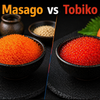
When you place masago and tobiko side by side, the differences become much easier to identify. The comparison covers several dimensions, each one meaningful in its own way depending on how you plan to use the roe.
| Masago | Tobiko | |
|---|---|---|
| Size | Very small, uniform, tends to clump | Larger, distinct, irregular shape |
| Appearance | Fine texture, less visual impact | More defined, premium look on the plate |
| Taste | Mild, slightly salty, subtle ocean flavor | Bolder, mildly sweet, slightly smoky |
| Texture | Soft, gentle pop when eaten | Firm, satisfying crunch |
| Natural Color | Pale yellow to light orange | Deep reddish-orange to amber |
| Price | More affordable, practical at volume | Higher cost, worth it as a featured ingredient |
How Masago and Tobiko Are Used in Sushi and Cooking
Both masago and tobiko appear across a wide range of sushi preparations, but they tend to be used in slightly different contexts. Masago is most commonly found coating the outside of uramaki rolls, the inside-out rolls where rice is on the exterior. It sticks well, adds color, and provides a mild flavor that does not compete with the fillings. Common rolls that use masago include California rolls, spicy tuna rolls, and various specialty house rolls.
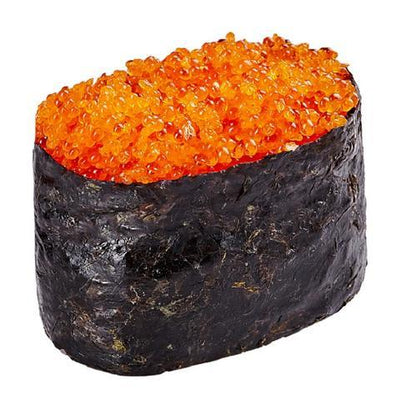
Tobiko is more often used as a topping rather than a coating. You will find it placed on individual nigiri pieces, on top of gunkan maki (battleship rolls), or used as a finishing touch on more elaborate sushi preparations. Its size and crunch make it well-suited for presentations where the roe is meant to be noticed and tasted distinctly, not just felt as a textural backdrop in the background of the dish.
Outside of sushi, both types of roe work well as toppings for rice bowls, as garnishes for seafood dishes, mixed into sauces, or served as part of a broader roe tasting spread. Tobiko's firmer texture holds up particularly well when mixed into warm dishes without breaking down immediately, while masago is better suited to cold preparations where its delicate texture is preserved. Browse our full sushi caviar selection to see both side by side and explore other options for your kitchen.
Masago vs Tobiko Nutrition
Both masago and tobiko are nutrient-dense foods that deliver a solid range of vitamins and minerals in a small serving. They are high in protein, rich in omega-3 fatty acids, and contain meaningful amounts of vitamins B12, C, and D. Fish roe in general is considered one of the more nutritionally concentrated seafood options available, and both masago and tobiko fit that description well.
Tobiko has a slight nutritional edge in some areas due to its larger egg size and denser composition. It tends to be slightly higher in omega-3 content per gram and has a marginally richer nutrient profile overall. That said, the difference is not dramatic, and both are excellent additions to a diet that includes seafood regularly. If you are comparing them purely from a health standpoint, either is a strong choice and the practical differences in taste and texture are more likely to drive your decision than the nutritional gap between them.
One consideration worth noting is sodium. Both masago and tobiko are cured with salt as part of their preparation, so they carry a moderate sodium content. People managing sodium intake should account for this when incorporating fish roe into their meals. A single tablespoon of masago contains roughly 160mg of sodium, so it is easy to enjoy in moderation as part of a balanced diet.
Which One Is Better: Masago or Tobiko?
Neither masago nor tobiko is objectively better. The right choice depends on what you are making and what you are prioritizing. Tobiko delivers a more pronounced flavor, a satisfying crunch, and a more visually striking appearance. It performs best when the roe is meant to play a starring role in the dish. If you are serving guests, building a premium sushi platter, or using roe as a featured garnish, tobiko is the stronger choice for that context.
Masago is the practical option when you need fish roe at volume, when the roe is meant to support rather than lead, or when budget is a genuine constraint. It coats rolls cleanly, adds a familiar flavor that most diners enjoy, and works reliably across a wide range of sushi preparations. Both options are available in premium quality through our sushi caviar selection, sourced and shipped fresh to maintain the quality you expect.
For home cooking, trying both side by side is the most informative thing you can do. The difference in texture and flavor is immediately apparent once you taste them together, and that firsthand experience will make every future choice much easier. Both are worth having in the kitchen, and both have their place depending on the dish in front of you.
Where to Buy Masago and Tobiko
Masago is widely available and can be found at most Asian grocery stores, Japanese supermarkets, and many mainstream fish counters. It is usually sold frozen in small containers, which makes storage straightforward. Tobiko is slightly less common in standard grocery stores but is readily available at specialty seafood retailers, Japanese markets, and quality online fishmongers.
When buying either, look for roe that has been properly stored frozen and shows no signs of freezer burn or off-coloring beyond what is expected for the variety. For tobiko in particular, sourcing from a reputable supplier makes a noticeable difference in quality. The flavor and texture of well-sourced tobiko is meaningfully better than lower-grade versions found at discount retailers. Our masago capelin roe and tobiko flying fish roe are both ethically sourced and shipped fresh, so you receive them at peak quality.
Masago or Tobiko: Making the Right Call
The masago vs tobiko comparison comes down to a few clear distinctions: tobiko is larger, crunchier, more flavorful, and more expensive, while masago is finer, milder, more affordable, and more commonly used in everyday sushi. Both are legitimate, quality ingredients with real culinary value and the choice between them is about context, not quality hierarchy.
Understanding what each one brings to the table makes you a more informed buyer, a better cook, and a more confident sushi diner. Whether you reach for masago or tobiko, you are working with one of the most interesting and versatile ingredients in seafood cuisine. The more you use both, the more naturally you will know which one belongs in each dish.